


Winter Conditions & Preparation
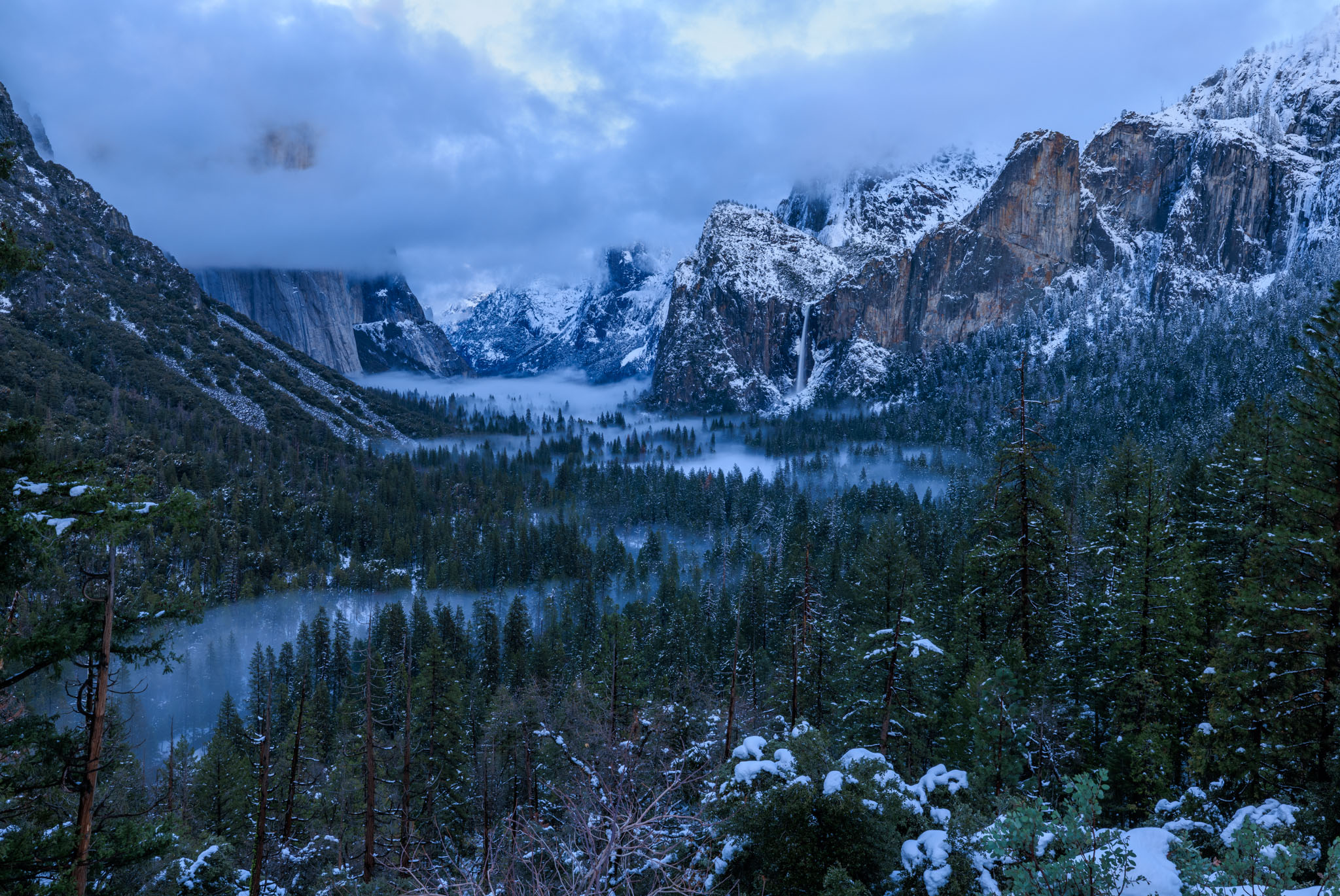
This photograph was taken in January 2023 in Yosemite National Park, during an active winter storm cycle—a time when visiting the park carries equal parts risk and reward. Winter storms can shut down roads, reduce visibility to near zero, and demand patience, preparation, and flexibility. But when conditions briefly align, Yosemite reveals a quieter, more elemental version of itself.
Driving in winter requires extra caution. While the park service does an impressive job keeping main roads open, certain stretches—especially shaded areas—can remain icy and unpredictable. In summer, staying outside the park is often a convenient and budget-friendly option. In winter, however, I strongly recommend lodging inside the park whenever possible. It significantly reduces driving risk and makes it far easier to respond quickly when light and weather conditions change.
For this trip, I entered the park from the south via Wawona Road and stayed at Curry Village. Being inside the park allowed me to move efficiently during short weather windows and maximize the golden hours—especially important given that a full loop through Yosemite Valley can take 30–40 minutes even in good conditions.
This image was captured in the evening, around 5:40 pm, near Northside Drive. The storm had just passed, and the valley was settling into one of those fleeting post-storm moments where light, cloud, and atmosphere evolve minute by minute.
Composition & Light
Photographing El Capitan is always a challenge. Its sheer scale makes it difficult to translate presence into a two-dimensional frame—too wide, and the mountain feels distant; too tight, and the surrounding context disappears.
For this image, I deliberately placed my camera extremely low to the ground and tilted it upward, allowing El Capitan to rise powerfully through the frame. As the sun dropped toward the horizon, a narrow window of warm light briefly illuminated the granite face while clouds and fog continued to drift across it. The contrast between the cool, storm-laden atmosphere and the warm glow on the rock created a natural separation, helping the subject stand out without forcing the scene.
Foreground, Scale & Story
Winter landscapes introduce a subtle but important challenge: foreground control. Snow blankets nearly everything, interrupted only by scattered rocks, uneven textures, and subtle tonal variations that can easily distract the eye. I intentionally kept the foreground minimal and uncluttered, allowing the viewer’s attention to move naturally toward the illuminated granite.
A bare, leafless tree on the left side of the frame became a quiet but important compositional anchor. Small enough to emphasize the immense scale of El Capitan, yet strong enough to balance the frame, it helped ground the image and reinforce a sense of place without competing for attention.
Technical Details & Processing
Focal Length: 15mm
Aperture: f/16
Exposure: Multiple exposures, lightly blended
Tripod: Yes
Editing: Lightroom
The image was captured using multiple exposures to manage dynamic range—particularly between the bright granite face and the darker, fog-filled foreground. Processing was done entirely in Lightroom, with a strong emphasis on localized adjustments rather than global contrast.
I enhanced cloud detail and sky character, gently warmed the sunlit portions of the rock face, and applied selective exposure control where fog introduced unwanted brightness. The goal was never to dramatize the scene beyond reality, but to faithfully represent the experience—cold, quiet, and fleeting, punctuated by moments of warmth and scale.
Recent Comments